


- HKC&ED News
- HKC&ED News

- Enforcement News
- FATF
- Industry News
- Industry News
- Telephone Deception
- E-mail Scam
- Trade Descriptions Ordinance
- Download
- Video
- Links
China drops value of the yuan against dollar for third day
2015-8-13
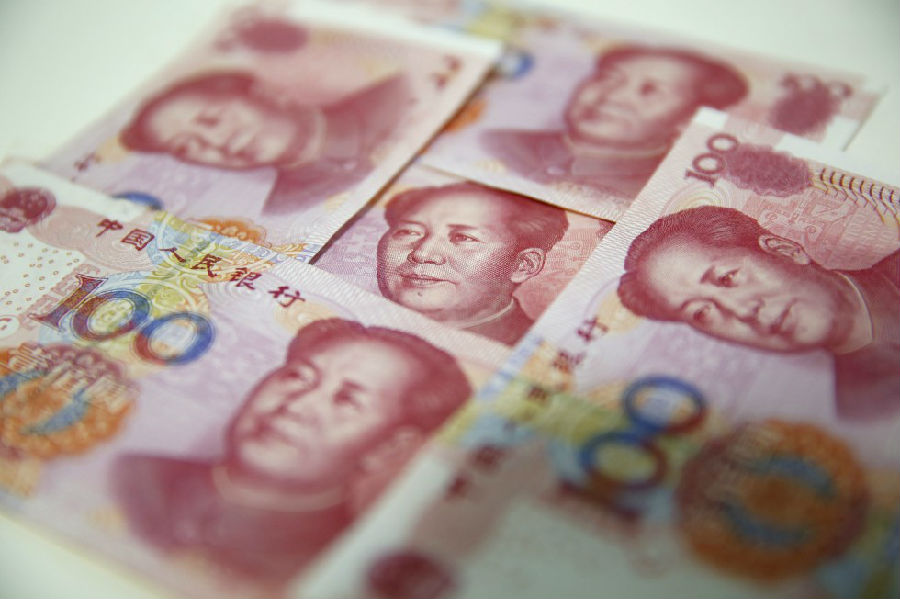
■ China's central bank says the devaluations are to designed to take more account of market forces
China’s central bank said on Wednesday it expects the yuan’s exchange rate mid-price fluctuation will be exaggerated for a “temporary” period after the bank announced changes to the mid-price setting mechanism on Monday.
The People’s Bank of China will hold a press briefing at 10.30am on Wednesday in Beijing.
In an opening statement, the central bank reiterated that there were no economic fundamentals to suggest that yuan would continuously depreciate, adding that that PBOC would continue to improve its exchange rate mechanism, maintain a reasonable and “basically stable” exchange rate, and foster the opening up of China’s forex market.
China set the reference rate for its currency more than 1 per cent lower against the US dollar on Thursday, its third consecutive reduction.
The central bank put the yuan’s central parity rate at 6.4010 yuan for $1.0, the China Foreign Exchange Trade System said, a drop of 1.11 percent from the previous day’s 6.3306.
The currency has lost 3.5 per cent against the US dollar in China and around 4.8 per cent in global markets between Tuesday and Wednesday after the People’s Bank of China changed the way it calculates the reference rate around which the yuan is allowed to trade in a 2-percentage-point band.
The central bank said it would now calculate the daily yuan fix by taking more notice of market forces, including the closing price in the previous day’s trading session.
Tuesday’s yuan devaluation – which the bank initially said was a one-off – followed a run of poor economic data and resulted in the biggest one-day fall since 1994. It sparked fears of a global “currency war” and accusations that Beijing was unfairly supporting its exporters, but the central bank on Wednesday sought to reassure financial markets that it was not embarking on a steady depreciation.
“Looking at the international and domestic economic situation, currently there is no basis for a sustained depreciation trend for the yuan,” the People’s Bank of China said.
After the yuan slid further early in Wednesday trade, currency dealers said Chinese state-owned banks were seen selling dollars on behalf of the central bank to restrain the yuan’s fall, and the spot market rate recovered late in the day to close 6.3870.
“Apparently, the central bank does not want the yuan to run out of control,” said a trader at a European bank in Shanghai.
However, sources involved in the Chinese policy-making process said powerful voices within government were pushing for the yuan to go still lower, suggesting pressure for an overall devaluation of almost 10 per cent.
The International Monetary Fund said China’s move to make the yuan more responsive to market forces appeared to be a welcome step and that Beijing should aim for an effectively floating exchange rate within two to three years.
Beijing has been lobbying the IMF to include the yuan in its basket of reserve currencies known as Special Drawing Rights, which it uses to lend to sovereign borrowers, which would enable more international use of the yuan.
William Dudley, head of the New York Federal Reserve, also said an adjustment to the yuan was probably appropriate if the Chinese economy was weaker than the authorities had expected.
On a trade-weighted basis, China’s yuan has been rising in recent years in part because of its peg to the US dollar.
However, the devaluation was decried by US lawmakers from both parties as a grab for an unfair export advantage and could set the stage for testy talks when President Xi Jinping visits Washington DC next month.
Source: South China Morning Post